Benjamin Cunningham · Moreland University · Learning Environment Plan · Step 8 of the LEP · ED504 · October 18, 2026
The theory, and what it is for in a classroom
Maslow (1943) proposed that human motivation is organized by needs: physiological needs (food, water, sleep, warmth, health), safety (freedom from fear and harm, order, predictability), love and belonging (affection, friendship, a group), esteem (competence, achievement, respect from others and for oneself) and self-actualization (becoming what one is able to be). Lower needs, when unmet, dominate: a hungry child is organized by hunger, not by the lesson. Two corrections to the textbook version matter for a teacher. First, Maslow never drew a pyramid; the pyramid was a management-textbook invention, and it has made the theory look like a staircase that must be climbed in order (Bridgman, Cummings and Ballard, 2019). Maslow himself wrote that most people are partly satisfied and partly unsatisfied at every level at once. The large cross-national test by Tay and Diener (2011) found the needs are real and universal, but that people draw well-being from higher needs even when lower ones are unmet, and a study of school-aged children found that deficiency needs and growth needs are related but not strictly sequenced (Noltemeyer, Bush, Patton and Bergen, 2012). Second, the top of the hierarchy is culturally shaped: in collectivist cultures the need to belong and to honor the group can sit above individual esteem (Gambrel and Cianci, 2003), and Maslow's own summer with the Siksika (Blackfoot) Nation in 1938 showed him a community in which belonging and the community's well-being came first (Blackstock, 2011). In an Isan village, where a child's standing comes from family and group, that matters: a child who loses face in front of the class has lost belonging, not only esteem.
What the theory is for. It turns the question a teacher asks when a child disrupts a lesson from "what rule did this child break?" to "what does this child need?" Behavior is information about a need. That does not remove the boundary (Step 4's routines still hold), but it changes the order of the response: need first, behavior second, and the response is designed to meet the need rather than to punish its symptom. Steps 4 to 7 of this plan already serve the hierarchy: predictable routines and signals are safety; the information-rich room and the Friday stage are belonging and esteem; the family plan is love and belonging extended to the home. Step 8 makes the link explicit and adds what I will do when a need shows up as behavior.
The needs of the children in my room: what the numbers say
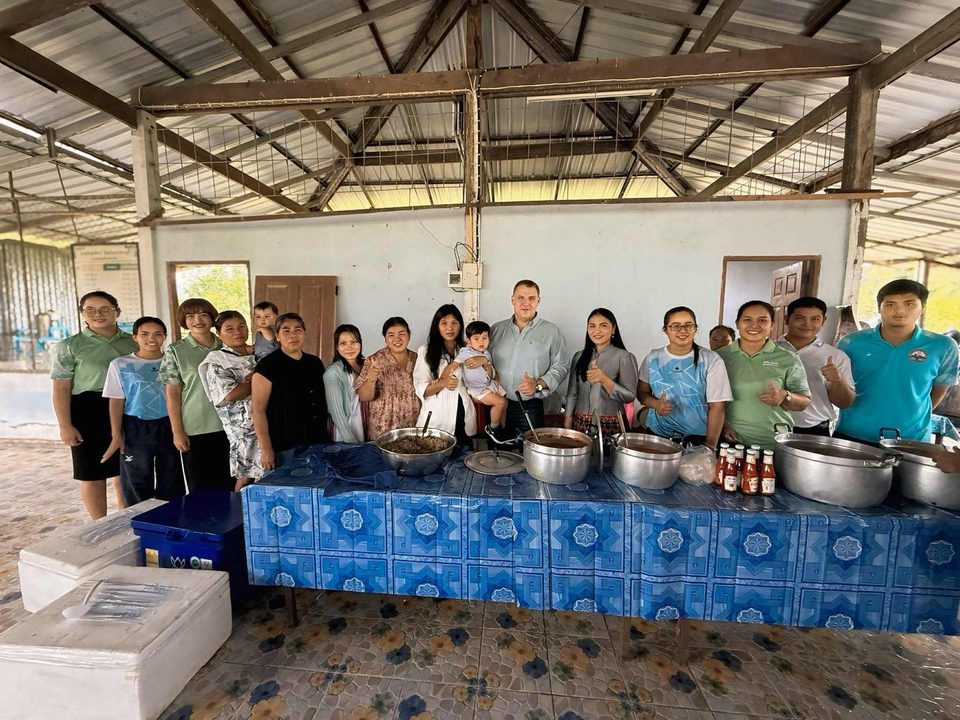
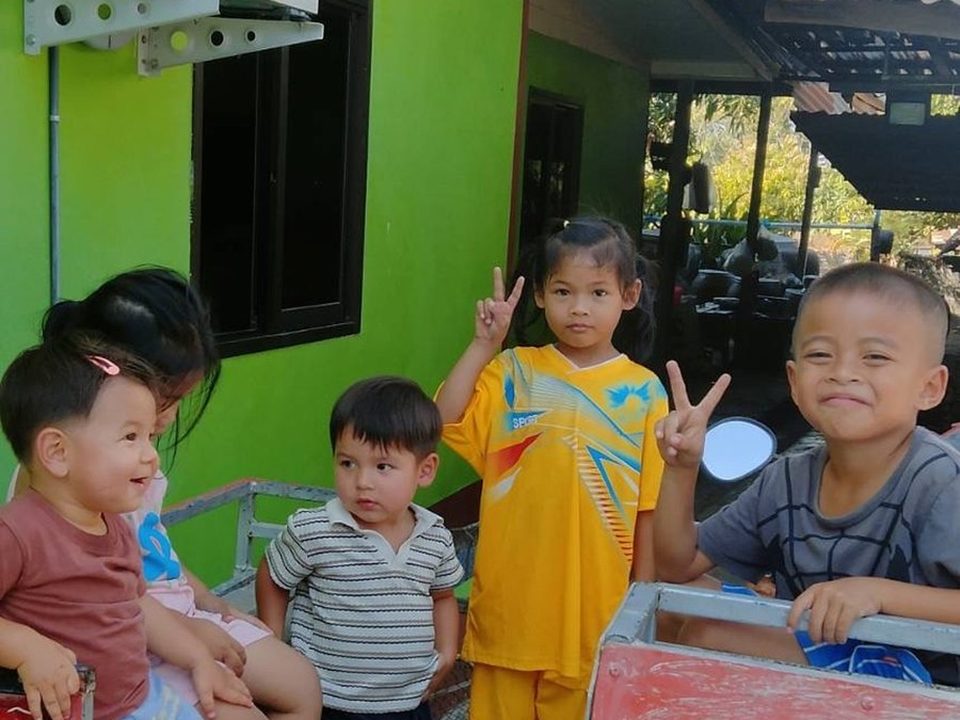
The children I teach are Prathom 4–6 (ages 9–12) in a village school in Rattanaburi, Surin. Thailand's 2022 Multiple Indicator Cluster Survey (UNICEF Thailand and the National Statistical Office, 2023) describes the country they grow up in: 13 percent of children under five are stunted and 7 percent wasted, while 11 percent are obese; 54 percent of children aged 1–14 experienced violent discipline at home in the month before the survey, down from 75 percent in 2015 but still more than half; one child in four under 18 (about three million) does not live with either parent, mostly because a parent has migrated for work, and the share living with grandparents and neither parent rose from about 2 percent in 1986 to 8 percent in 2006 nationally, with the Northeast carrying the heaviest share (Jampaklay et al., 2012); about six in ten children have fewer than three children's books at home; and attendance at early childhood education fell from 86 percent in 2019 to 75 percent in 2022. On the other side of the ledger, every government primary school serves a free lunch and free milk under national programs, so the midday meal is met; breakfast and the evening meal are where hunger shows in my room. Corporal punishment has been banned in Thai schools since the Ministry of Education regulation of 2005, and in March 2025 Thailand amended the Civil and Commercial Code (Section 1567) to prohibit violent punishment of children by parents as well. Those numbers are the hierarchy's lower floors drawn for my village: a child who comes to school without breakfast, a child who was hit last night, a child whose mother is in Bangkok, and a child who has never owned a book, sit in the same row.

Step 8 table: needs and behaviors
How each level of Maslow's hierarchy shows itself when unmet, in the physical room and online; the questions I ask before I respond; what I do; and which part of this plan already serves the need. The Thai in the second column is what the need sounds like when a child says it.
| Need (Maslow) | The need, in a child's words | What I might see when it is unmet: physical classroom | Online classroom | Root-cause questions I ask first | What I do: prevent, respond, partner | Plan steps and tools |
|---|---|---|---|---|---|---|
| 1. Physiological (food, sleep, water, health, movement, the bathroom) | หนูหิว · ง่วง · ไม่สบาย I'm hungry · sleepy · sick | Head on the desk after lunch; irritable before lunch; cannot sit still; asks for the toilet repeatedly; scratching, coughing, a fever nobody noticed; the child who "doesn't care" at 8:30 and is fine at 11:00; falls asleep in the hot afternoon; aggression over small things | Camera off and silent; absent on mornings; logs in late from a bed; sibling noise; the same child always "has no battery" | Did this child eat this morning? When did they sleep, and where? Is anyone sick at home? Is the room too hot? When did they last move? Is the toilet a problem (girls, pain, no soap)? | Prevent: a snack shelf (rice crackers, fruit from the school garden, water) for anyone, no questions; a water break and a stand-and-move every 20 minutes (Step 4's outdoor and standing transitions); the first lesson after lunch is active, not seated; a fan rota and the shaded side of the room for afternoon reading. Respond: a quiet word, never a public one; food or water first, then the lesson; the sick child to the co-teacher and the health room, not to a reprimand. Partner: the Sunday LINE note asks families about sleep and breakfast in a light way; the school lunch program and the village health volunteer (อสม.) for a child who is ill or thin; the home visit when hunger is a pattern. | Step 4 (movement transitions); Step 6 (the Forms incident log gains a "need" column: hungry, tired, sick); Step 7 (home visit, LINE) |
| 2. Safety (freedom from fear and harm; order; predictability; a body that is safe) | หนูกลัว · ไม่รู้ว่าต้องทำอะไร I'm scared · I don't know what I'm supposed to do | Flinching when an adult moves fast; refusal to go to the toilet alone; silence that is watchfulness; hiding bruises; panic at a raised voice; defiance that is really fear of being shamed; the newcomer who will not speak (the silent period is safety-seeking); anxiety when the schedule changes; lying to avoid a consequence | Will not unmute or turn the camera on (home not safe to show); drops out when a parent enters the room; chat used to test whether the teacher will shame | Is this child afraid of someone, here or at home? Does the child know what happens next in this lesson? Have I or anyone in the room shamed this child in public? Is the fear of the language (being made to speak before ready)? | Prevent: the visible schedule and the four-part transitions (Step 4) so nothing is a surprise; no public correction, ever; a calm voice as the signal, never a shout; a "pass" option for speaking (chorus first, pairs second, alone only when ready); the toilet in pairs; a named safe adult (the co-teacher) for every child; the Thai consent and privacy rules so nothing about a child is shown. Respond: remove the audience, not the child; "You are safe here, tell me when you are ready"; if harm at home is suspected, the student support system's referral path (screening, head teacher, the Ministry's 1300 social assistance line) rather than my own investigation. Partner: the family plan's strengths-first contact so the home does not hear only bad news; the Child Protection Act (2003) and the school's procedures. | Step 4 (signals, routines, picture of what comes next); Step 6 (Classroomscreen timer and traffic light; the log); Step 7 (safe, private channels) |
| 3. Love and belonging (friendship, affection, a group, a place in the class, the family present) | ไม่มีใครเล่นกับหนู · คิดถึงแม่ Nobody plays with me · I miss my mother | Clowning for laughs; following the loudest child; bullying or being bullied; refusing a partner; tears at nothing; attention-seeking that escalates when ignored; the Kui- or Khmer-speaking child who sits alone; the child who "forgets" materials to get a reaction; the grandparent-raised child who clings to any adult | Private messages to other children instead of the task; leaving the meeting when a friend leaves; a camera on only when praised; sadness at the parent in Bangkok visible on the call | Who is this child's friend in the room? Which group are they in, and do they have a job in it? When did a family member last hear something good about this child? Is the home language welcome here, or is this child the only one of their kind? | Prevent: every child in a table group with a job (Step 4); the trilingual word wall with the child's own language on it (Step 5); the buddy system for newcomers; greeting every child by name at the door; the weekly good-news message home for five families (Step 7). Respond: attention given before it is demanded ("I noticed you helped Nok"); a role, not a reprimand, for the clown; a pair for the isolated child chosen for warmth, not level; the monthly video call to the parent far away. Partner: the grandparent interview and the class book, which make the child's family the class's teacher; the parent network; the Friday stage open to families. | Step 4 (jobs); Step 5 (word wall, class books); Step 7 (good-news messages, video calls, families as co-teachers) |
| 4. Esteem (competence, achievement, respect, being seen as able) | หนูทำไม่ได้ · หนูโง่ I can't do it · I'm stupid | "I don't care"; refusing to try ("won't" that is "can't"); tearing up the worksheet; disrupting the lesson just before the part they cannot do; mocking others' English; the long-term low achiever who has learned that silence is safer than a wrong answer; the P6 child reading at a P2 level who runs the room instead | Never answers in the chat; leaves before the quiz; "my internet is bad" at every task; sarcasm about the lesson | Can this child actually do what I just asked? Is the text at their level (WIDA 1, 2 or 3)? When did this child last succeed at something in front of others? Have I praised effort and growth, or only right answers? | Prevent: three levels of every text (Step 5, the ESLteacher.com builder) so every child has work they can do; EnglishTeacher.com practice at the child's own pace, where "You did it!" comes from the screen and not from the teacher; "words I own" as the measure, so growth is visible every Friday (Plickers); jobs that carry status (reader, word-finder, camera operator). Respond: a task the child can do in the next two minutes, then the harder one; private feedback on the work, public praise for the effort; the mocking child given the job of helping, which is the respect they were after. Partner: the student-led conference, where the child shows their own data to the family; the recording from the Friday stage, which lets a child hear their own English grow. | Step 5 (three levels, measures); Step 6 (Plickers, EnglishTeacher.com, Wayground); Step 7 (student-led conferences) |
| 5. Self-actualization (curiosity, creativity, mastery for its own sake, becoming oneself; Maslow's later cognitive and aesthetic needs sit here) | หนูอยากลองเอง · หนูเบื่อ I want to try it myself · I'm bored | Boredom that becomes mischief; the able child who finishes and disrupts; "why do we have to?"; drawing instead of listening; teaching the neighbor instead of doing the task; questions that derail the lesson because the lesson is too small | Finishes in two minutes and leaves; private chat full of a side project; off-task but creative | Is this child under-challenged? Do they have any choice in what they do? Is there a way for this child to make something, not only complete something? Who is this child becoming, and does the room know it? | Prevent: choice inside every task (which topic, which text, which role); the class books, the stage and the Story Telling competition as places to make something real; the able child as the author of the next worksheet or the teacher of the Isan line. Respond: a harder text, a creative version of the task, a job with responsibility (recording the stage, running the Friday quiz). Partner: USAEnglish.com's competition as the real audience; the family as the first audience for the class-book page. | Step 5 (class books, the stage); Step 6 (the recorder, Wayground authoring); Step 7 (the competition as a family event) |
ESL methods: Maslow's hierarchy and English learners in US schools
Applying Maslow to classroom practice with ELLs. Second-language acquisition research arrived at Maslow's lower floors by another road. Krashen's affective filter hypothesis holds that anxiety, low self-confidence and low motivation raise a filter that keeps comprehensible input from becoming acquired language (Krashen, 1982): a frightened child does not learn English, however good the lesson. The "silent period" that newcomers pass through is best read as safety-seeking rather than refusal (Krashen and Terrell, 1983), and Igoa's long study of immigrant children shows that silence is the inner world of a child protecting itself in a place that does not yet feel safe (Igoa, 1995). The practical application is sequencing supports by need. On day one a newcomer's physiological and safety needs come before any English: breakfast in the classroom if the school offers it, the bathroom and lunch words with pictures, a map of the building, a bilingual buddy, the child's name pronounced correctly, a sign in the home language, and contact with the family in their language by voice (Step 7). In the first weeks the work is belonging: the child's language on the wall, a group with a job, a buddy chosen for warmth, the home language allowed as a tool (translanguaging; García and Wei, 2014), and the teacher's deliberate attention to a child who is not yet asking for it. School belonging predicts motivation, effort and achievement for early adolescents (Goodenow and Grady, 1993), and in the largest longitudinal study of newcomer immigrant youth in US schools, a supportive relationship with a teacher or mentor was among the strongest predictors of whether a student's academic trajectory held or declined over five years (Suárez-Orozco, Suárez-Orozco and Todorova, 2008). Esteem follows from competence made visible: texts at the child's WIDA level with "can do" descriptors that name what the child can already do (WIDA, 2020), growth measured as "words I own" rather than as distance from proficiency, and a student-led conference where the child shows the family their own data. Self-actualization is the identity text: writing in which the child's language, family and story are the content, read to an audience (Cummins and Early, 2011; Cummins, 2001). A trauma-informed frame runs under all of this: for a refugee or a child who crossed a border, predictability, choice and no public shaming are not kindness but the conditions under which the brain can learn at all (SAMHSA, 2014).
The dynamic factors and contexts that act on ELLs in the United States. English learners were 10.6 percent of US public-school students in fall 2021, about 5.3 million children (NCES, 2024), and they are concentrated in the households where Maslow's lower needs are most often unmet. In 2024, 18.4 percent of US households with children, 6.7 million households, were food insecure, and in 3.3 million of them the children themselves were (USDA Economic Research Service, 2025); more than a million public-school students experience homelessness in a year; and immigrant families are over-represented in both. Safety is now a policy variable, not only a classroom one: Dee and Murphy (2020) found that local police partnerships with immigration enforcement (287(g) agreements) reduced Hispanic student enrollment by about ten percent within two years, with the losses concentrated in the youngest grades, and after the federal government rescinded the "protected areas" guidance in January 2025, so that enforcement could take place near schools, early analyses of districts affected by raids found sharp rises in absences (Dee, 2025). A child who is afraid that a parent will not be home at the end of the day is a child at the safety level, whatever the lesson. Other contexts stack on these: students with limited or interrupted formal education arrive with the esteem floor already damaged by years out of school (DeCapua and Marshall, 2011); long-term English learners, classified for six years or more, have heard "not yet proficient" for most of their schooling, which is an esteem injury the program model itself inflicts; Brown's stages of acculturation (euphoria, culture shock, recovery, adaptation) mean that the same child moves between belonging and safety needs across a single year (Brown, 2007); and the teacher supply is thin where the need is thickest. In Washington, DC, where I will hold my license, English learners' proficiency rates in 2023 were 22 percent in English language arts and 18 percent in mathematics against 38 and 26 percent for all students, their graduation rate was 13 points lower, and the ratio of certified EL teachers to students had roughly halved in three years (OSSE, 2023; D.C. Policy Center, 2026), even as 86 percent of DC's English learners met their annual language-growth target. Read through Maslow, the growth number says the children can learn when the conditions are met, and the proficiency and staffing numbers say the conditions are often not.
Using the theory for ELLs' academic, linguistic and social acclimation and growth. Maslow's hierarchy is useful to an ESL teacher as a sequence and a diagnosis, provided it is held loosely. As a sequence, it orders the first weeks of a newcomer's year: food, safety and a predictable day before belonging; belonging before any demand to perform; competence made visible before any test; and authorship and voice as the goal of the year, not the reward at its end. As a diagnosis, it reads a behavior for the need behind it: the newcomer's silence as safety, the clowning as belonging, the "I don't care" as esteem, the derailing question as a mind under-fed. Academically, this means meeting the content at the child's level in their language first (the rice calendar in Isan before the life cycle in English; the family's accounts before the word problem), because a child who is the expert on the content has esteem to spend on the language. Linguistically, it means lowering the filter deliberately: chorus before pairs before solo, errors treated as information, the home language as a resource, and input the child can understand with the picture and the Thai or Spanish beside it (Krashen, 1982; Cummins, 2001). Socially, it means engineering belonging rather than hoping for it: the buddy, the job, the wall, the family on the listening corner, the class book with the family's words. The theory's limits are also instructive. The needs are not a ladder, so a hungry child can still be proud of a story and should be given the chance; the top of the hierarchy is cultural, so for a Thai, Lao, Salvadoran or Ethiopian child the group's honor may matter more than individual achievement, and a reward system built on individual stars can miss the child entirely (Gambrel and Cianci, 2003); and the hierarchy explains the motivation, not the teaching, which still has to be comprehensible, leveled and content-rich. Used that way, Maslow does for an ESL classroom what Krashen's filter does for the lesson: it makes the teacher responsible for the conditions of learning, and it puts the question "what does this child need?" before "what did this child do?".
Where the article's causes of misbehavior sit on the hierarchy
The module's article, "Why Do Children Misbehave? Finding the Root Causes of Classroom Misbehavior" (Hamilton, n.d., Insights to Behavior), names ten root causes. Dreikurs's four "mistaken goals" of misbehavior (attention, power, revenge, inadequacy) sit behind several of them (Dreikurs and Soltz, 1964), and two of the ten are not needs at all but learning: a child who has learned that acting out works, and a child testing where the boundary is. Each cause is matched to the need it most often signals and to a response that meets the need rather than the symptom.
| Cause in the article | Maslow level it signals | Dreikurs goal | What it looks like in my room | Response that meets the need |
|---|---|---|---|---|
| Needs not being met (hungry, tired; the article's "1 in 7" US children food-insecure) | Physiological | — | The child who is "lazy" before 9:00 and fine after the snack; the head on the desk at 13:00; in my village, the breakfast and the evening meal are the gaps the free lunch does not cover | Food, water, rest, the health room; the snack shelf; movement before the afternoon lesson; a word home about breakfast and sleep |
| Medical issues (autism, ADHD, anxiety; the article's "1 in 54") | Physiological and safety | — | The child who cannot sit for twenty minutes; the child undone by noise or a change of plan; anxiety that looks like refusal; in a Thai village school, often undiagnosed | The Step 4 supports (movement, a picture of what comes next, a quiet seat); the student support system's screening and referral; no punishment for a symptom |
| Relationships aren't in place | Love and belonging | — | No reason to comply because there is no one in the room the child is attached to; the newcomer; the child nobody has greeted by name | Greeting at the door, knowing the child's interests, the buddy, the job, the good-news message home (Step 7) |
| Seeking attention of adults or classmates | Love and belonging | Attention | The clown, the interrupter, the child who "forgets" everything and gets a reaction every time | Attention given before it is demanded; acknowledge the positive, do not feed the negative; a role with an audience |
| Power needs | Esteem (and safety: who is in charge here?) | Power | The child who will not follow the group, who wants to be the group's leader, who refuses the instruction while looking at me | Choice inside the limit ("now or after the song"); real responsibility (the timer, the quiz, the camera); the routine held without the contest |
| Lack of confidence and skills (cannot say "I need help" or "can I join?") | Esteem, and belonging | Inadequacy | Lashing out at the child whose work looks better; the Kui-speaking child who cannot ask to join the game in Thai or English | Teach the words: sentence frames in three languages on the wall ("Can I play?", "I need help"); private feedback; a task the child can do first |
| Curriculum-related issues (too easy, or too hard and masked by acting out) | Esteem and self-actualization | Inadequacy (too hard); — (too easy) | The able child who finishes and disrupts; the P6 child reading at a P2 level who runs the room instead of reading | Three levels of every text (Step 5); EnglishTeacher.com at the child's own pace; a harder text or an authoring job for the bored child; "words I own" so growth is visible |
| The classroom environment (noise, movement, over-stimulation) | Safety and physiological | — | Forty-five children, a fan, the heat, a lesson that is all noise; the child who cannot work with a neighbor in view | The quiet corner and the shaded side of the room; headphones in the listening corner; the noise meter the class can see (Step 6); pairs before whole-class |
| Testing boundaries | Safety (is the rule real? what happens next?) | Power | The deliberate slow walk at the signal; the rule broken while watching me | Calm, consistent, private follow-through; the transition taught like content (Step 4); the boundary explained in Thai and English |
| Bad behavior works for them (acting out to escape the task or get the thing) | Learned, not a need; the need behind it is usually esteem (escape from failure) or belonging | Power | The fit at the fifteen problems; the task quietly removed to stop the noise, which teaches the fit | Do not shrink the task; shrink the first step instead ("do three, show me"); keep the expectation and add the support; reinforce the replacement behavior, not the escape |
Three situations, and how they were resolved
Composites from village classrooms like mine, with details changed, read through the hierarchy.
The boy who put his head down. A Prathom 5 boy began every English lesson with his head on the desk and answered any prompt with a shrug; by the third week he was pulling the chair of the girl beside him. The first reading was defiance (a rule problem). The co-teacher's quiet question at the door the next morning found the physiological floor: he was getting up at five to help with the cattle before school and not eating until lunch. The resolution was a rice cracker and water at the door, the first lesson's active opening moved to the start, and a Sunday voice note to the grandmother that said only what he did well. The chair-pulling stopped within the week because the need that drove it was met; the "defiance" had been hunger and sleep.
The girl who would not speak. A new girl, moved from another province mid-year, said nothing for a month, in any language. Pushing her to answer produced tears and then absence. Read as safety and belonging, the response was to stop asking: chorus answers only, a buddy who spoke her home language, her name on the word wall with the Isan line, and no public attention. Her first words in class came in week five, in the pair, in Isan; her first English sentence on the Friday stage came in week nine, with the buddy beside her. The silent period was not a problem to solve but a floor to build.
The clown. A Prathom 6 boy made the class laugh at every transition and was the first name in every incident; the usual response (a public warning, then a loss of break) made it worse, which is the signature of the attention goal. The resolution was to give him the audience he was after on my terms: the job of running the Classroomscreen timer and calling the signal, then the Friday quiz, then the camera on the stage. The laughter became his role, the role carried status, and the incidents fell. His family heard about the job before they heard about anything else.
The routine: how needs are seen every day
- The door. Every child greeted by name, looked at, and asked one thing. Breakfast, sleep and a sick face are visible at the door and invisible at the desk.
- The first five minutes. The Do-Now on the screen, water and the snack shelf open, the schedule for the lesson shown, and the question "anyone need anything before we start?" asked in Thai by the co-teacher.
- The need column. The Step 6 incident form gains one field: the need I think was behind the behavior (hungry, tired, sick, afraid, unclear, alone, ashamed, bored). Friday's ten minutes with the co-teacher reads the column, not only the incidents.
- The response ladder. Need first; private, never public; restore, do not punish (the child repairs what was disrupted and keeps their place in the group); the boundary from Step 4 held calmly; a family contact that leads with a strength; the student support system's screening and referral when a need is beyond the classroom (health, safety at home, learning difference).
- The monthly question. One line in the monthly page to the head teacher: which needs are showing up most, and what the school could do (breakfast, the health room, a counselor's visit).
How I will know it is working
| Measure | How | Target by week 8 |
|---|---|---|
| Needs seen before behaviors | Share of logged incidents with a need recorded and a need-based response | 90 percent |
| Physiological floor | Snack shelf used without stigma; children sleeping in class | Open daily; no child asleep in week 8 who was in week 1 |
| Safety | Public corrections (co-teacher tally); children using the pass option | Zero public corrections; the pass used and then declined |
| Belonging | Every child named a friend and a job; isolated children at the start | None isolated by week 8 |
| Esteem | Children who refused a task; "words I own" | Refusals down by two thirds; every child 30 words |
| Self-actualization | Children with a page in the class book, a stage recording, a job with responsibility | Every child at least one |
| Incidents | Count per week (Step 6 log) | Down by a third from week 4; none repeated by the same child without a need-based plan |
Reflection
The children's behaviors I used to find most irritating, the head on the desk, the clown, the shrug, turned out to be the clearest messages in the room, and the hierarchy gave me the dictionary. The practical change is small and daily: a snack shelf, a greeting, a private word, a job, a voice note home, and the discipline of writing down what I think the need was before I write what the child did. The research changes nothing about the boundaries; Step 4's routines still hold, and the room is still predictable. What it changes is who the boundary is for: a routine held calmly is itself the safety that a frightened child needs, and a correction given privately is itself the belonging that an attention-seeking child was after. For the English learner, in my village or in a DC classroom, the point is sharper still, because the filter that keeps a frightened or shamed child from acquiring the language is the same thing the hierarchy describes, and the teacher's job is the conditions. The theory's imperfections are part of the lesson: a pyramid nobody drew, a culture-bound top, needs that overlap rather than stack. Held loosely, it is the best question I have: not "what did this child do?" but "what does this child need, and which of my steps meets it?".
References
- Blackstock, C. (2011). The emergence of the breath of life theory. Journal of Social Work Values and Ethics, 8(1).
- Bridgman, T., Cummings, S., & Ballard, J. (2019). Who built Maslow's pyramid? A history of the creation of management studies' most famous symbol and its implications for management education. Academy of Management Learning & Education, 18(1), 81–98.
- Brown, H. D. (2007). Principles of language learning and teaching (5th ed.). Pearson Longman.
- Cummins, J. (2001). Negotiating identities: Education for empowerment in a diverse society (2nd ed.). California Association for Bilingual Education.
- Cummins, J., & Early, M. (Eds.). (2011). Identity texts: The collaborative creation of power in multilingual schools. Trentham Books.
- D.C. Policy Center. (2026, February). English learners in the District's public schools.
- DeCapua, A., & Marshall, H. W. (2011). Breaking new ground: Teaching students with limited or interrupted formal education in U.S. secondary schools. University of Michigan Press.
- Dee, T. S. (2025). Immigration enforcement and student absences [working paper]. Stanford University.
- Dee, T. S., & Murphy, M. (2020). Vanished classmates: The effects of local immigration enforcement on school enrollment. American Educational Research Journal, 57(2), 694–727.
- Dreikurs, R., & Soltz, V. (1964). Children: The challenge. Hawthorn Books.
- Gambrel, P. A., & Cianci, R. (2003). Maslow's hierarchy of needs: Does it apply in a collectivist culture? Journal of Applied Management and Entrepreneurship, 8(2), 143–161.
- García, O., & Wei, L. (2014). Translanguaging: Language, bilingualism and education. Palgrave Macmillan.
- Hamilton, C. (n.d.). Why do children misbehave? Finding the root causes of classroom misbehavior. Insights to Behavior. https://insightstobehavior.com/blog/children-misbehave-finding-root-classroom-misbehavior/
- Goodenow, C., & Grady, K. E. (1993). The relationship of school belonging and friends' values to academic motivation among urban adolescent students. Journal of Experimental Education, 62(1), 60–71.
- Igoa, C. (1995). The inner world of the immigrant child. Lawrence Erlbaum.
- Jampaklay, A., Richter, K., Vapattanawong, P., Tangchonlatip, K., Hayeetae, C., & Ponphai, N. (2012). Children living apart from parents due to internal migration (CLAIM). Institute for Population and Social Research, Mahidol University, and UNICEF Thailand.
- Krashen, S. D. (1982). Principles and practice in second language acquisition. Pergamon.
- Krashen, S. D., & Terrell, T. D. (1983). The natural approach: Language acquisition in the classroom. Alemany Press.
- Maslow, A. H. (1943). A theory of human motivation. Psychological Review, 50(4), 370–396.
- Maslow, A. H. (1970). Motivation and personality (2nd ed.). Harper & Row.
- National Center for Education Statistics. (2024). Condition of education 2024: English learners in public schools. U.S. Department of Education.
- Noltemeyer, A., Bush, K., Patton, J., & Bergen, D. (2012). The relationship among deficiency needs and growth needs: An empirical investigation of Maslow's theory. Children and Youth Services Review, 34(9), 1862–1867.
- Office of the State Superintendent of Education (OSSE). (2023). Tracking our English learners' path to proficiency. District of Columbia.
- Substance Abuse and Mental Health Services Administration (SAMHSA). (2014). SAMHSA's concept of trauma and guidance for a trauma-informed approach (HHS Publication No. SMA 14-4884).
- Suárez-Orozco, C., Suárez-Orozco, M. M., & Todorova, I. (2008). Learning a new land: Immigrant students in American society. Harvard University Press.
- Tay, L., & Diener, E. (2011). Needs and subjective well-being around the world. Journal of Personality and Social Psychology, 101(2), 354–365.
- Thailand. Child Protection Act B.E. 2546 (2003); Ministry of Education Regulation on Student Punishment B.E. 2548 (2005); Civil and Commercial Code Section 1567 as amended (2025).
- UNICEF Thailand & National Statistical Office. (2023). Thailand Multiple Indicator Cluster Survey 2022: Survey findings report. Bangkok.
- U.S. Department of Agriculture, Economic Research Service. (2025). Household food security in the United States in 2024.
- U.S. Department of Homeland Security. (2025, January 21). Statement on the rescission of the 2021 protected-areas guidelines.
- WIDA. (2020). WIDA English language development standards framework, 2020 edition: Kindergarten–grade 12. Board of Regents of the University of Wisconsin System.
- Tools built by the author and referred to in this step: EnglishTeacher.com (self-paced practice, Ploy Hears), ESLteacher.com (leveled worksheets), USAEnglish.com (the Story Telling championship), and the recorder at benjamincunningham.com/lep/vlog/. Photographs: the author's own.
← Step 7 · Family Communication · All courses · ED 504 page · Next: the Behavior Improvement Plan →