Benjamin Cunningham · Moreland University · Learning Environment Plan · Step 7 of the LEP · ED504 · October 18, 2026
Context: the families
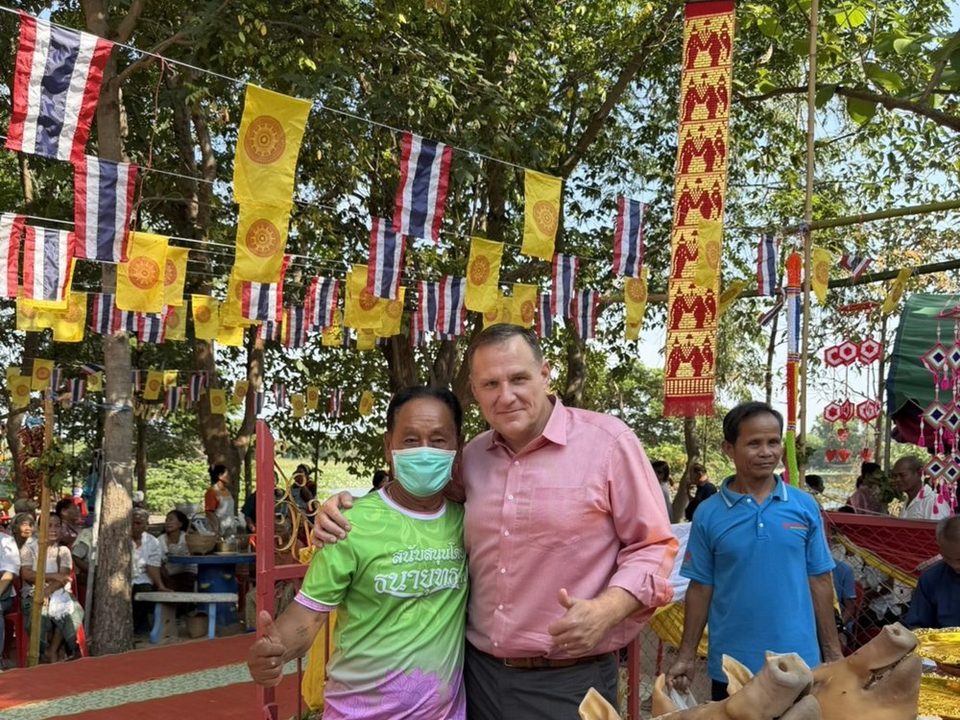
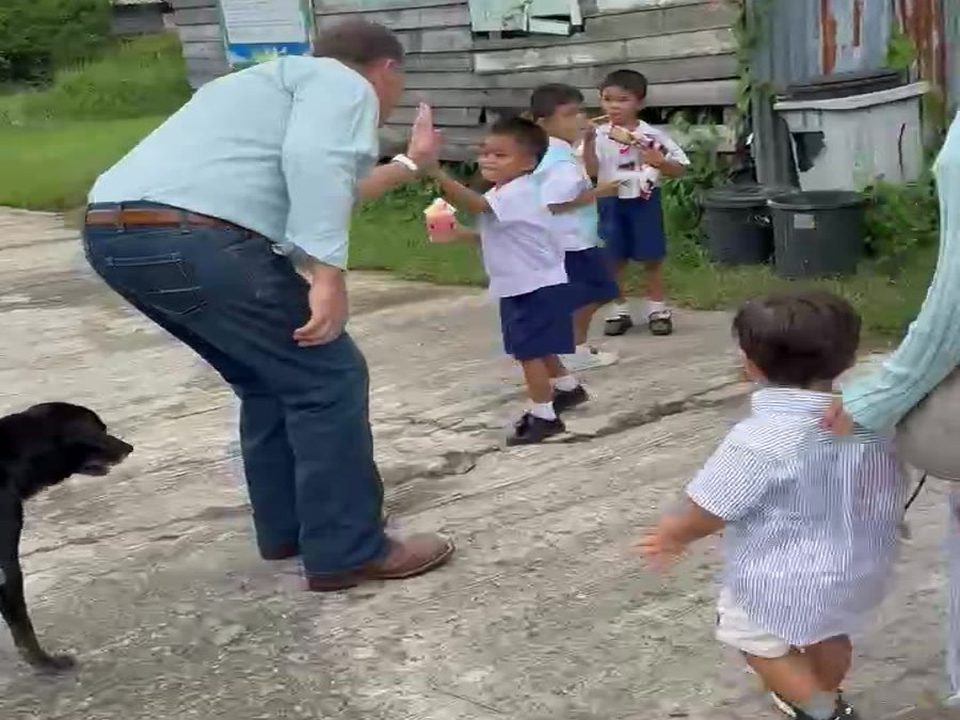
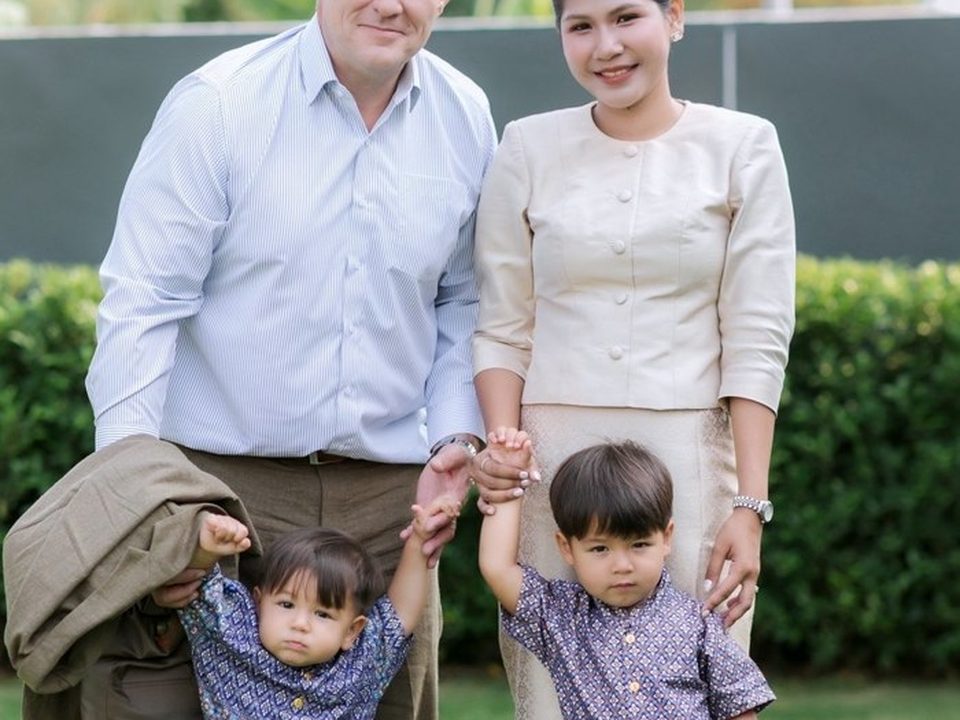
Who they are. The children in my Prathom 4–6 English classes come from the villages around Ban Han Hee School in Rattanaburi district, Surin. Most families farm rice; many parents work in Bangkok, the Eastern Seaboard or abroad for most of the year and come home for the planting, the harvest and Songkran, so a large share of the children live with grandparents. That is not unusual: the Mahidol University study of children living apart from parents found the share of Thai children under 18 living with grandparents and neither parent rose from about 2 percent in 1986 to 8 percent in 2006, and the pattern is heaviest in rural Isan (Jampaklay et al., 2012). At home the children speak Thai, Isan (the Lao of the Northeast, spoken but rarely written), and in some families Kui or Northern Khmer. Adults read Thai to very different degrees; grandparents often read little. Nearly every household has one smartphone, shared, with LINE on it. No home has English print. The school already runs the Thai student support system (ระบบการดูแลช่วยเหลือนักเรียน), whose first tool is the teacher's home visit, and forms a parent network (เครือข่ายผู้ปกครอง) for each class and holds a parents' meeting each semester. This plan builds on those structures rather than beside them.
What they bring. Rice farming is a science and a mathematics the children's families know better than any textbook: seasons, soil, water, rainfall, yields, prices, weights, the market. Grandparents carry the village's stories, songs and the Isan, Kui and Khmer that the children are losing. Families run shops, weave silk, fish, cook for temple days, repair motorcycles, and keep accounts. Every one of those is content knowledge, and every one of them is a text waiting to be written in English. The plan treats families as co-teachers of content and language, not as an audience for homework (Moll, Amanti, Neff and González, 1992).
The barriers, named. A parent four hundred kilometers away; a grandmother who cannot read the note; a family that does not speak Thai at home; the rice harvest, when every hand is in the field; a phone with no data left; and the deference many village families feel toward a school, which keeps them from asking anything. Hornby and Lafaele (2011) group such barriers into family factors, child factors, parent–teacher factors and societal factors; the strategies below are each matched to one of them, because a plan that does not name the barrier is a plan for the families who were already coming.
Principles
- Strengths first. The first thing a family hears from me about their child is what the child can do, and the first thing I ask a family is what they know that the class could learn. No deficit language in any channel.
- Culturally sustaining, not only responsive. The home languages and the village's knowledge are not a bridge to English that is removed once crossed; they stay in the room, on the walls and in the class books all year (Paris and Alim, 2017).
- Two-way, or it is not communication. Every channel has a reply path, and families' replies change the plan. Goodall and Montgomery (2014) call the shift from involvement to engagement a continuum from the school's agenda to the family's; this plan is written to move along it.
- Thai first, voice before text, paper beside phone. Every message exists in Thai, most as a voice note, and anything important also goes home on paper, because the family without data or without reading is the family the plan is for.
- Content, not just English. Families help with mathematics, science, social studies and Thai through the languages they have; the English follows the knowledge (Cummins, 2000).
- Respect for time, calendar and consent. Nothing is scheduled in the planting or the harvest; nothing about a child is shared beyond the family; photographs and recordings only with the signed Thai consent (Personal Data Protection Act, 2019).
The frameworks behind the plan
Two research frameworks organize the strategies. Epstein's six types of involvement (parenting, communicating, volunteering, learning at home, decision making, collaborating with the community) are the checklist that keeps a plan from being only newsletters (Epstein, 2011); every strategy below is tagged with its type. The Dual Capacity-Building Framework (Mapp and Kuttner, 2013) says that family–school partnerships fail when only one side is asked to change, so the plan builds the capabilities, connections, confidence and cognition of the staff (me and my co-teacher learning the families' languages, calendar and knowledge) as deliberately as the families' (learning what the school is asking and that they are already able to help). WIDA's considerations for multilingual families add the specifics for English learners: communicate in the family's language, learn what the family wants for the child, and treat the home language as an asset in the classroom (WIDA, 2017). The evidence that this matters is old and consistent: when families are engaged in ways linked to learning, children do better in school regardless of income or background (Henderson and Mapp, 2002), brief regular messages home measurably raise engagement (Kraft and Rogers, 2015), and parents act on information about their child that they did not have (Bergman, 2021). For reading in particular, what families do at home (hearing the child read, talking about words) predicts later reading skill (Sénéchal and LeFevre, 2002), and for multilingual families the strongest version of that is not reading in English but talking, telling and reading in the home language.
Channels and calendar
| When | Channel | What goes out, what comes back | Reaches the family who… |
|---|---|---|---|
| Every day | Home folder + "Ask me about" card | One bilingual sentence the child can explain at home; a tick from any adult, no writing needed. Comes back with the tick and sometimes a note. | Cannot read; has no phone |
| Every Sunday evening | LINE class group: text in Thai + voice note | The word of the week in English and Thai as a voice note, a photo of the word wall, what is coming this week, one thing families can do. Comes back as voice replies, questions, photos. | Reads little; is away in Bangkok |
| Every week | LINE one-to-one | One good-news message to five families a week, so every family hears something good about their child every term before they hear anything else. Comes back as a reply and often a story. | Expects only bad news from a school |
| Every Friday | The stage, open door | Families and grandparents welcome at the Friday storytelling stage; the term's recordings for the listening corner. | Lives near the school; is a grandparent |
| Monthly | One-page bilingual newsletter (paper + LINE photo); a family recording | What we learned in each subject, the class book page of the month, the family interview of the month. Comes back as the next interview volunteer. | Everyone, in print |
| Monthly | Video-call slot for distant parents | "My child reads to me": a ten-minute LINE video call from the classroom to a parent in Bangkok or abroad, the child reading their class-book page. | Works far away |
| Each term | Parents' meeting (ประชุมผู้ปกครอง) + student-led conference + 20-minute family workshop in Thai | The child shows their own data and sets a goal with the family; the workshop is "five things you can do without English". | Everyone; interpreters for Kui and Khmer |
| Each term | Home visit (เยี่ยมบ้าน) with the co-teacher | Every family the meeting did not reach, within the student support system the school already runs; the strengths card is filled in at the kitchen table. | Did not come to the meeting |
| Each year | The Story Telling competition; the class-book launch | Families rehearse the child's story at home and come to the school round; the year's class books are presented to the families who made them. | Everyone, as audience and author |
| Monthly | One page to the head teacher | Families reached, home visits done, concerns, requests (interpreter, consent, schedule). | The administrators |
Strategies across the content areas
Collaboration has to support language and literacy in the content areas, not only in English class. Each row is a home activity done in the family's language, a piece of English academic language it feeds, and a material from my own tools that makes it possible for a family with no English.
| Content area | Home activity, in Isan, Thai, Kui or Khmer | Academic language and literacy it builds in English | Material or tool | Family strength it uses |
|---|---|---|---|---|
| Mathematics | Count the rice sacks, weigh the harvest, price the morning market, measure the cooking; the child writes the numbers and reads them back in English | Numbers to 10,000, units (kilogram, baht, liter), comparing (more than, heavier than), the word problem | EnglishTeacher.com Numbers topics on the family phone; the Print page word list "Market and money" | The farm and the shop are the family's accounts |
| Science | The rice calendar with a grandparent: when to plant, when the rain comes, what the field needs; the weather chart filled in at home for a week | Sequence words, cause and effect (because, so), the life cycle, weather and season vocabulary | The class weather chart (Step 5); the ESLteacher.com worksheet "Rice farming" at three levels with Thai gloss | Farming knowledge that no teacher in the room has |
| Social studies | Draw the village map with the family; interview a grandparent about one festival or one job; bring one object from home and say what it is for | Place and direction words, past tense, the informational paragraph, the interview question | The grandparent interview sheet (bilingual); the recorder for the listening corner; the class book "Our village in English" | Elders as historians; the village as the curriculum |
| Thai and English language | The word of the week said three ways; the reading log ticked by any adult; the family retells a folk tale in Isan and the child retells it in English | Tier 2 vocabulary, narrative structure, retelling, reading volume | The Sunday voice note; the take-home word list; the Story Telling stories on USAEnglish.com with Thai summaries | Oral tradition; the family's own storytellers |
| Health and PE | Name the food on the table and the parts of the body in three languages; the family's recipe for a temple day, measured and written | Food and body vocabulary, instructions (imperatives), quantities | EnglishTeacher.com Food and Body topics; the recipe page of the class cookbook | The kitchen as a laboratory |
| Arts and music | A song or a mor lam verse from a grandparent, recorded; the child teaches the class one line and its English | Rhythm and stress in English, translation as a skill, performance language | The recorder; the Friday stage; the USAEnglish.com score sheet for peer feedback | Isan music and the pride in it |
The ten strategies
1. Know the family before asking anything of it (Epstein: parenting; Dual Capacity: cognition). In the first three weeks, every family is reached twice: by the learner survey from Step 2, in Thai with a voice-note version, and by the strengths card (บัตร "สิ่งที่ลูกเก่ง", "what my child is good at"), which asks only three things: what the child does well at home, what the family knows that the class could learn (farming, cooking, weaving, music, a trade, a language), and how the family would like to hear from me (LINE, paper, a visit, a call; which adult; which language). Families who do not return the card get the home visit the school's student support system already requires, done with my Thai co-teacher, and the card is filled in at the kitchen table. Why: this is the funds-of-knowledge inventory (Moll et al., 1992) and the first move of the Dual Capacity framework: I cannot build on strengths I have not asked about. Inclusive by design: voice and visit for the family that does not read; the Kui- or Khmer-speaking family is visited with a community member who speaks the language; the parent in Bangkok gets the card by LINE and answers by voice.
2. The Sunday voice note and the word of the week (communicating; learning at home). Every Sunday evening the class LINE group gets a short Thai text and a voice note: the English word of the week with its Thai, the sentence it lives in, a photo of the word wall, and one thing the family can do this week that needs no English. Families are asked to have the child say the word three ways (English, Thai, home language) to someone at home; grandparents who cannot read play the note. The word is always a content word from the week's lessons (harvest, heavier, map, because), not a classroom word, so the home conversation is about the subject. Why: brief, regular, specific messages are the form of communication that changes behavior at home (Kraft and Rogers, 2015); voice is the Thai-first rule applied to the reader who is not one; the three-language routine is translanguaging carried into the home, which keeps the Isan word alive beside the English one. Reply path: families answer with a voice note of the child saying the word; the best are played in class on Monday, with the family's permission. Template (Thai, then English):
สวัสดีครับผู้ปกครอง ป.5/1 สัปดาห์นี้เราเรียนคำว่า harvest (ฮาร์-เวสท์) แปลว่า "เก็บเกี่ยว" ลองให้ลูกพูดคำนี้ให้ฟัง 3 ภาษา (อังกฤษ ไทย อีสาน) แล้วถามว่าที่บ้านเก็บเกี่ยวเดือนไหน ใบคำศัพท์อยู่ในกระเป๋านักเรียน ไม่ต้องรู้ภาษาอังกฤษก็ช่วยได้ครับ แค่ฟังลูกพูด ขอบคุณครับ ครูเบน
Hello, P.5/1 families. This week we learned the word harvest, "gep giao" in Thai. Please have your child say it to you in three languages (English, Thai, Isan), then ask them which month your family harvests. The word list is in the school bag. You do not need any English to help: just listen to your child say it. Thank you. Teacher Ben.
3. The home folder and the "Ask me about" card (learning at home; communicating). Every child takes home a folder every day with one card: "Ask me about… / ถามหนูได้ว่า…" and a bilingual sentence stem for that day's lesson ("Ask me why the field needs water in June", "Ask me to count the chickens in English"), plus the reading log, which any adult signs with a tick, a thumbprint or a drawing, never a sentence. The take-home word list from EnglishTeacher.com's Print page is in the same folder on Mondays; the ESLteacher.com worksheet with its Thai gloss on Wednesdays. Why: the research on home literacy says the conversation matters more than the medium (Sénéchal and LeFevre, 2002), and a card that tells a family exactly what to ask, in their language, turns "did you do your homework" into a conversation about content. The tick instead of a signature is the inclusive detail: it asks for presence, not literacy. Reply path: the back of the card has a box for "something my child told me", in any language; the co-teacher reads them on Friday.
4. Families as co-teachers of content: the grandparent interview and the class books (volunteering; collaborating with the community). Each month one family is the class's teacher. The child interviews a grandparent or parent at home with a bilingual question sheet about one thing the family knows (the rice calendar, silk weaving, the fish traps, the festival food, repairing an engine), records it on the family phone in Isan, Kui, Khmer or Thai, and the class turns it into a page in English for that term's class book, with the family's words kept in their language beside the English. The family is invited to the Friday stage when the page is read, and gets the page printed. The books ("Our village in English", "Rice farming words", "The festival") become reading texts in Box C of the Step 5 library, and the recordings go to the listening corner. Why: these are identity texts (Cummins and Early, 2011): writing in which the children and their families see themselves, which they read with pride to an audience, and which carried the strongest literacy gains for multilingual learners in that research; and they are the content curriculum (science, social studies, mathematics) written in the academic English of informational text, from knowledge the family already holds. It is the strategy that most changes who is the expert in the room. Inclusive: the family that cannot come to school is still the author; the recording is made at home; the Kui or Khmer interview is translated with a community member, and the home-language words stay on the page.
5. "Five things you can do without English": the family workshop (parenting; learning at home; Dual Capacity: confidence). At each term's parents' meeting, twenty minutes in Thai run by my co-teacher, with me demonstrating, on five things every family can do whatever their English: listen to the child say the word of the week and ask what it means; ask "tell me in Isan" after every English lesson, because retelling is understanding; open the topic of the week on EnglishTeacher.com on the family phone and let the child play the sounds (it works offline after the first open); tick the reading log every night the child reads anything in any language; come on a Friday. Families practice each one on the spot with their own child. A one-page Thai handout and a two-minute voice note go home for those who could not come, and the home visit covers the rest. Why: the Dual Capacity framework's "confidence" is the finding that families most often stay away because they believe they cannot help; the workshop's job is to prove they can, with their own child, in twenty minutes (Mapp and Kuttner, 2013). The five things are chosen because each one is an oral-language act, and oral language in any language is the root of reading (Step 5).
6. Student-led conferences with the child's own data (communicating; decision making). At the term meeting, each child sits with their family and shows three things: the word-wall quiz results (Plickers, Step 6) as "words I own", their page in the class book, and a recording from the Friday stage; then the child and the family set one goal for the next term, in the family's language, which I write on the goal card in Thai and English. The co-teacher interprets; for Kui and Khmer families a community interpreter is arranged a week ahead; for the parent far away, the conference runs on a LINE video call from the classroom. Why: student-led conferences turn the meeting from a report on the child into a conversation led by the child, and the family hears academic language used about their own child's academic language. The goal card is the decision-making type: the family decides what next, and the plan is adjusted to it. Record: the goal card is photographed into the family-communication log, so the next conversation starts from it.
7. The distant parent: "my child reads to me" (communicating; learning at home). For every child with a parent working away, one ten-minute LINE video call a month from the classroom, scheduled on the Sunday note: the child reads their class-book page or the week's text to the parent, says the word of the week three ways, and the parent asks one "Ask me about" question. The parent's reply (a voice note or a photo of where they are) goes into the child's folder. Why: skipped-generation households are the ordinary case in Isan, not the exception, and a plan that only reaches the adult at home leaves the parent out of the child's schooling for most of the year. Bergman (2021) shows that parents act on specific information about their child; this gives the parent the information in the child's own voice. Inclusive: the call is made from the school's connection, so the family's data is not spent; a parent abroad in a different time zone gets a recording from the recorder on my laptop instead, sent one-to-one.
8. The Story Telling competition as the family's event (collaborating with the community; volunteering). Every education district in Thailand runs a free English Story Telling competition, and the one my wife Ploy and I organize through USAEnglish.com adds prize money and a final. The school round is built as a family event: families choose the story with the child from the competition's list, rehearse it at home in any language first, come to the school round as the audience, and the gold medalist's family helps make the clip the competition asks for. The Thai parents' page on USAEnglish.com explains the whole thing to a family in their language, and the competition's score sheet is the rubric the children use to score each other all year, so the family has seen it before the judges do. Why: this is the community-collaboration type done with a structure Thai families already recognize (a district competition with medals), which makes it legitimate in the village in a way a classroom activity is not; and rehearsing a story at home is the richest home-literacy act there is: narrative structure, performance language and memorization, with the family as coach. Inclusive: every child performs at the school round, not only the one who goes on; the family that cannot come watches the recording on LINE.
9. Families in the decisions: the parent network and the class-book vote (decision making; collaborating with the community). The class's parent network representative (เครือข่ายผู้ปกครอง, which Thai schools form for every class) is asked to do three concrete things a term: pass on what families say about the plan, choose with the other families the topic of the next class book, and name one village expert to invite. The families' choice is binding: if they choose "the temple fair", that is the term's social-studies book. The local expert (a weaver, a rice miller, a mor lam singer, the village health volunteer) comes for one Friday, speaks in Isan or Thai, and the children write the English page. Why: Ishimaru (2020) argues that equitable collaboration means families shaping the school's agenda rather than being informed of it; a book topic and a guest are small but real agenda items, and they are the ones a village family is expert in. Inclusive: the vote is by LINE poll and by paper slip in the folder, so every family votes once.
10. Two-way always: the reply paths, the log and the monthly question (communicating; Dual Capacity: connections). Every channel in this plan has a reply path (the voice reply, the card's back, the goal card, the poll, the interview), and every contact in either direction is logged in a Google Sheet shared with the co-teacher and the head teacher: date, family, channel, language, what was said, what changed. Once a month the Sunday note ends with one question in Thai ("What reached you this month? What did not?"), and the answers change the next month: a family that never opens LINE goes on the paper-and-visit list; a family that answers by voice gets voice. The log is also how I notice the family I have not heard from in three weeks, which triggers a one-to-one message and then a visit. Why: Goodall and Montgomery's continuum ends in families engaged on their own terms, and the only way to know their terms is to ask and record the answer; the log turns good intentions into a pattern I can see.
Reaching every family: the inclusion check
| The family who… | How the plan reaches them | Strategies |
|---|---|---|
| Cannot read Thai, or reads little | Voice notes; the card's tick; the workshop practiced live; the home visit; the child as reader of the message | 1, 2, 3, 5 |
| Is working in Bangkok or abroad | The monthly video call; the Sunday note on their phone; the conference by video; recordings sent one-to-one | 2, 6, 7 |
| Speaks Kui or Khmer at home | Home visit with a community interpreter; ClassDojo messages translated into Khmer; the home-language words kept in the class book; the interpreter booked for the conference | 1, 4, 6 |
| Is a newcomer family without Thai | Picture-led card; EnglishTeacher.com Translate at the gate; Google Translate conversation mode; the class book page in their language | 1, 3, 4 |
| Has no phone, or no data | Paper for everything: the folder, the newsletter, the handout; the Friday open door; the home visit | 3, 5, 8 |
| Is busy in the planting or the harvest | Nothing scheduled in June–July or November–December; the voice note takes one minute; the conference moved to the family's day | Calendar |
| Has a child with a learning difference | The Step 4 supports explained in Thai at the conference; the same signals and pictures used at home; the goal card written with the family | 1, 6 |
| Expects only bad news from a school | The first message is good news; the strengths card before any form; the family as the class's teacher | 1, 4, 10 |
Communication with school administrators
My environment allows family communication, so the note in the assignment does not apply to me, but the head teacher is a partner in this plan and would be the only channel if it did not. Once a month the head teacher gets one page in Thai from the log: families reached by each channel, home visits completed and pending, the concerns raised by families, the requests I need help with (an interpreter, a consent form, a visit schedule, a family that needs the school's social support), and the goal cards that involve the school beyond my room. The page goes into the student support system's paperwork (the screening groups and the home-visit record the school already keeps), so my family work is the school's family work and not a private project. If family communication were ever not possible, the same page, with the same log, would go to the head teacher weekly instead of monthly, and the head teacher would carry the family contact.
The year, term by term
| When | Family communication | Content-area link |
|---|---|---|
| Term 1, May–June (start; rice planting from June) | Survey and strengths card; first good-news messages; Sunday notes begin; parents' meeting with the first workshop; home visits for families not reached; nothing else scheduled in late June–July | Science: the rice calendar with a grandparent; Mathematics: counting seed and sacks |
| Term 1, August–September | First grandparent interview and class-book page; first monthly video calls; first newsletter; the parent network's book vote | Social studies: the village map; Health: the kitchen on a temple day |
| Term 1, late September–October (Ok Phansa, term ends) | Student-led conferences with the term's data; goal cards; the class book presented | Thai and English: retelling the term's folk tale |
| Term 2, November–December (harvest; Loy Krathong) | Voice notes only; no meetings; the Loy Krathong page written from a family interview done in October | Science and mathematics: weighing and pricing the harvest at home |
| Term 2, January–February | The Story Telling school round as a family event; the second workshop; the village expert's Friday | Arts: the song from a grandparent; English: the story rehearsed at home |
| Term 2, March (term ends; competition clips due 31 March) | Second conferences; the year's class-book launch for families; the end-of-year question: what should change next year | All: the books as the year's record |
How I will know it works
| Measure | How | Target by the end of term 1 |
|---|---|---|
| Every family known | Strengths card returned or home visit done | 100% by week 6 |
| Families reached weekly | LINE read count + paper folder ticks (the log) | 80% of families every week; 100% every month |
| Two-way contact | Families who have replied in any channel | Every family at least twice a term |
| Learning at home | Reading-log ticks; "Ask me about" cards returned; word-of-the-week voice replies | Four ticks a week for 80% of children; 20 voice replies a week |
| Families as teachers | Interviews recorded; class-book pages with a family's words | One a month; every child's family in a book by year's end |
| Conferences | Student-led conferences held (in person or by video) | 100% each term, with a goal card |
| Distant parents | Monthly video calls completed | Every child with a parent away, every month |
| What the children gain | Words owned (Step 5), retellings on the Friday stage, class-book pages written | Rising against the Step 5 targets; every child a page |
| Administrators | Monthly page to the head teacher; requests answered | Every month; no request older than two weeks |
Reflection: what partnership means in this village
The families of my children are not hard to reach; schools have been hard to reach for them. A grandmother who raised four children on a rice farm and cannot read the note that comes home is not an absent parent; she is an expert the note was not written for. The plan's test is whether it changes what the school asks of a family: from "sign here" to "tell us what you know", from a report on the child to a conversation led by the child, from English the family cannot help with to content the family knows better than I do, with the English following. The inclusive strategies here are not accommodations added to a plan for other families; they are the plan, because in this room the family who reads little, speaks Isan, and sees a parent twice a year is the typical family. If the class books at the end of the year carry forty families' words beside the children's English, and the log shows every family heard from and heard, then the room has become what Standard 3 asks for: an environment built with others.
References
- Bergman, P. (2021). Parent-child information frictions and human capital investment: Evidence from a field experiment. Journal of Political Economy, 129(1), 286–322.
- Breiseth, L., Robertson, K., & Lafond, S. (2011). A guide for engaging ELL families: Twenty strategies for school leaders. Colorín Colorado.
- Cummins, J. (2000). Language, power and pedagogy: Bilingual children in the crossfire. Multilingual Matters.
- Cummins, J., & Early, M. (Eds.). (2011). Identity texts: The collaborative creation of power in multilingual schools. Trentham Books.
- Epstein, J. L. (2011). School, family, and community partnerships: Preparing educators and improving schools (2nd ed.). Westview Press.
- Goodall, J., & Montgomery, C. (2014). Parental involvement to parental engagement: A continuum. Educational Review, 66(4), 399–410.
- Henderson, A. T., & Mapp, K. L. (2002). A new wave of evidence: The impact of school, family, and community connections on student achievement. Southwest Educational Development Laboratory.
- Hornby, G., & Lafaele, R. (2011). Barriers to parental involvement in education: An explanatory model. Educational Review, 63(1), 37–52.
- Ishimaru, A. M. (2020). Just schools: Building equitable collaborations with families and communities. Teachers College Press.
- Jampaklay, A., Richter, K., Vapattanawong, P., Tangchonlatip, K., Hayeetae, C., & Ponphai, N. (2012). Children living apart from parents due to internal migration (CLAIM). Institute for Population and Social Research, Mahidol University, and UNICEF Thailand.
- Kraft, M. A., & Rogers, T. (2015). The underestimated power of teacher–parent communication: Evidence from a field experiment. Economics of Education Review, 47, 49–63.
- Laksanajan, S., Suwanchairop, S., & Pawarinnanon, M. (2010). The development of the student support system at Ban Wan School, Phen District, Udon Thani [in Thai]. The Golden Teak: Humanity and Social Science Journal, 16(2), 61–70.
- Mapp, K. L., & Kuttner, P. J. (2013). Partners in education: A dual capacity-building framework for family–school partnerships. SEDL and U.S. Department of Education.
- Moll, L. C., Amanti, C., Neff, D., & González, N. (1992). Funds of knowledge for teaching: Using a qualitative approach to connect homes and classrooms. Theory Into Practice, 31(2), 132–141.
- Paris, D., & Alim, H. S. (Eds.). (2017). Culturally sustaining pedagogies: Teaching and learning for justice in a changing world. Teachers College Press.
- Personal Data Protection Act B.E. 2562 (2019), Thailand.
- Sénéchal, M., & LeFevre, J.-A. (2002). Parental involvement in the development of children's reading skill: A five-year longitudinal study. Child Development, 73(2), 445–460.
- WIDA. (2017). ABCs of family engagement: Key considerations for building relationships with families and strengthening family engagement. WIDA Consortium, University of Wisconsin–Madison.
- Tools built by the author and used in this plan: EnglishTeacher.com (topic links, the Print page, Translate), ESLteacher.com (worksheets with Thai gloss), USAEnglish.com (the Story Telling championship, its parents' page in Thai and its score sheet), and the recorder at benjamincunningham.com/lep/vlog/. Photographs: the author's own.
← Step 6 · Technology Tools · All courses · ED 504 page · Next: Step 8 · Needs and Behaviors →